
Delivered project
Complete Network and Server Infrastructure Migration
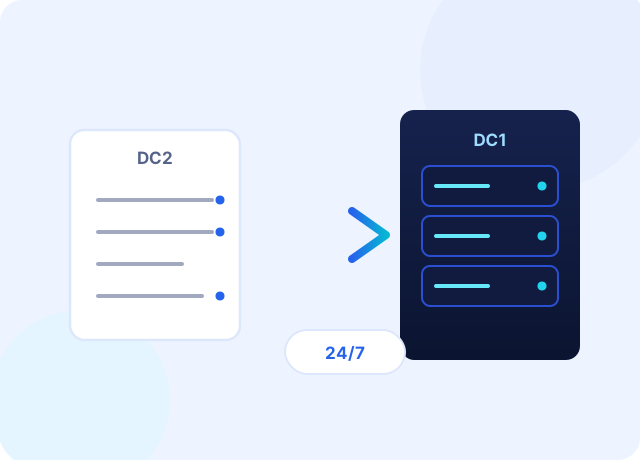
For a long-standing client we support day to day with comprehensive IT services and server and network administration, we carried out the migration of an entire production environment from a geo-redundant site (DC2) to the primary site (DC1). The project covered 24 server devices and 14 network devices — and business-critical services ran without a second of downtime throughout.
The Challenge
The client asked us to relocate their entire production network and server infrastructure from a geo-redundant site to their primary location. With services running 24/7, any unplanned outage would have meant real business risk.
Our advantage was knowing this environment inside out. We provide the client with comprehensive day-to-day IT support, administer their server and network infrastructure both on-premises and in the cloud, and configure and maintain their firewalls and VPN concentrators. Understanding both the current state of the environment and its planned growth, we could design the migration safely — no guesswork involved.
Scope of Work
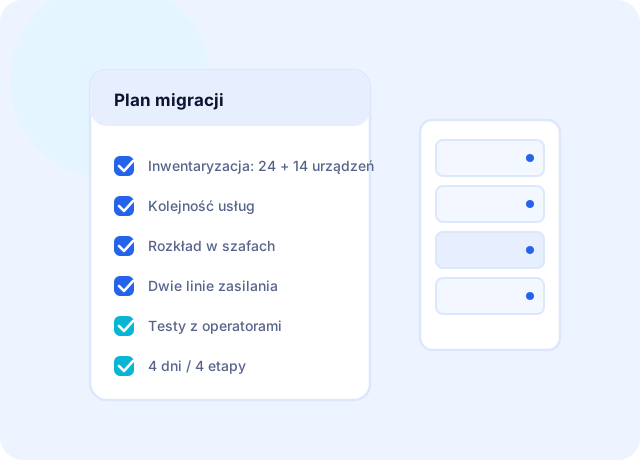
We started with a full inventory of hardware and rack space. The audit identified 24 production server devices (hypervisors and storage arrays) and 14 network devices: switches, BGP routers, a DMZ router, firewalls and VPN concentrators. We then verified which devices and links the migration had to cover and assessed the available space for additional equipment at DC1.
The DC1 server room initially had little spare capacity, but after clearing several racks of legacy equipment, space was no longer an issue. We drew up a detailed plan covering the order in which services would be migrated, the placement of devices in the racks, and the network and power connections — physically separating services within the room as much as possible and using two independent power lines.
We presented the plan to the client together with the schedule, potential risks and every step of the process, including post-migration testing. The telecom providers responsible for moving the access links (MPLS, BGP, Internet) were brought into the schedule as well. The migration was planned for four days, in four stages.
Project Execution
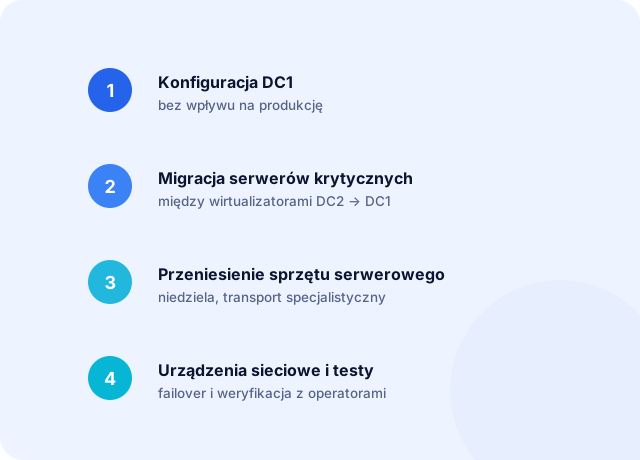
Stage one was preparing the configuration at DC1 for the incoming devices, based on the project plan. Since this work did not touch the live, business-critical production environment, we completed it during normal working hours with no impact on running services.
Stage two was migrating the critical servers between hypervisors from DC2 to DC1. In stage three, we physically relocated the server hardware with the help of a professional transport company — scheduled for a Sunday due to the nature of the services involved. The equipment was moved from the DC2 racks into the prepared racks at DC1 without major issues, and every task finished within its planned time window.
Stage four covered the network equipment. Our network engineers arrived on site in the morning alongside the telecom operator's staff. The hardware was dismounted at DC2, transported to DC1 and installed. After the physical connections were in place, we verified the ports, service operation and failover mechanisms — and the project was declared a success.
Technologies
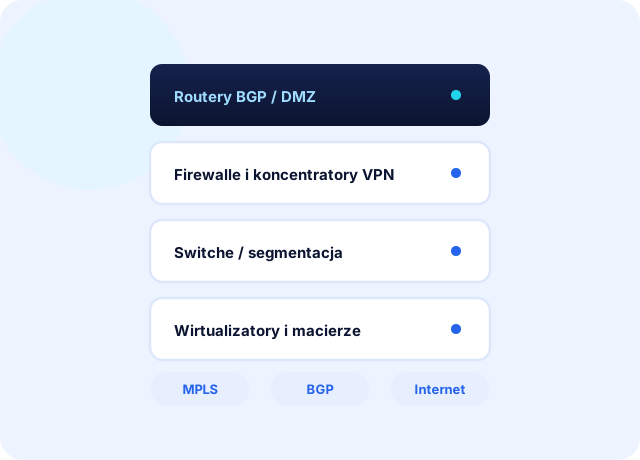
On the server side, the migration covered hypervisors and storage arrays; on the network side — switches, BGP routers, a DMZ router, firewalls and VPN concentrators. Together with the carriers, we moved the access links for key services, including MPLS, BGP and Internet connectivity.
Business continuity was protected by failover mechanisms, physical separation of services within the room, and power from two independent lines. Thanks to these safeguards, critical services did not experience a single second of downtime during the entire migration.
Results
- Business-critical services ran without a single second of downtime throughout the migration — from the perspective of users and 24/7 services, the move was almost unnoticeable, apart from one planned interruption lasting around a dozen seconds.
- The only observed interruption lasted 21 pings, occurred during a failover mechanism test and fell within the planned test scenarios.
- 24 server devices and 14 network devices relocated exactly as planned — in four days and four stages, within the assumed time windows.
- Access links (MPLS, BGP, Internet) moved in coordination with the telecom providers, with no impact on running services.
- Ports, services and failover mechanisms all verified after the move — the project was completed successfully.